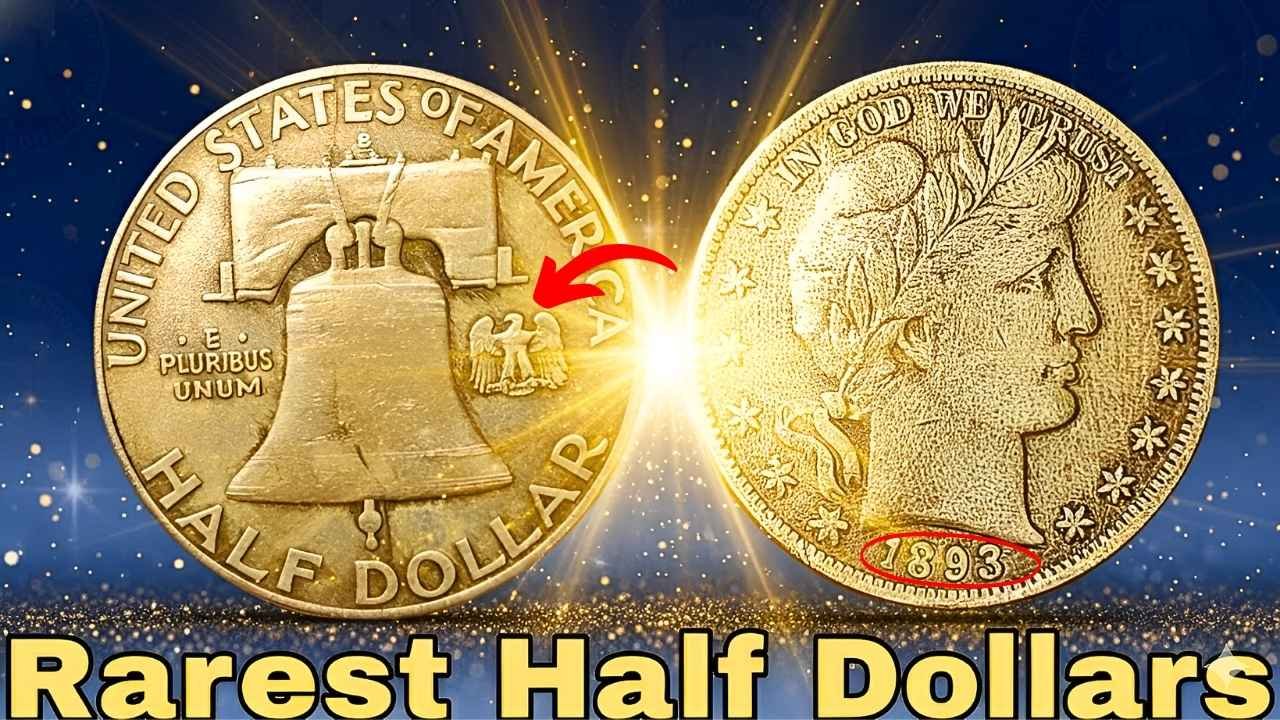
Ever pulled a dusty old half dollar from a family heirloom or estate sale and wondered if it’s junk or jackpot? In the world of numismatics, Barber and Franklin half dollars stand out as silver treasures that blend history, artistry, and scarcity to drive sky-high values. Minted in 90% silver, these coins aren’t just metal—they’re time capsules from America’s Gilded Age and post-WWII boom. While common ones fetch $20–$50 (tied to silver’s $32/oz spot), ultra-rare examples with pristine condition, low mintages, or striking errors can command $10,000 to over $100,000 at auction. This 2025 review dives into the rarest gems, key value drivers, and tips to spot them. Whether you’re a newbie or seasoned collector, one in your pocket could rewrite your finances!
A Quick History: The Barber and Franklin Eras
Barber Half Dollars (1892–1915): Liberty’s Elegant Reign
Designed by U.S. Mint Chief Engraver Charles E. Barber, these coins feature Liberty in a Phrygian cap on the obverse and a heraldic eagle on the reverse. Born from the 1890 Mint Act mandating design refreshes, they bridged the Seated Liberty series and modern coins. With modest mintages (many under 1 million), Barbers circulated widely but faced wear from daily use. Production ended in 1915 amid anti-German sentiment (Barber’s name sounded too “foreign”). Today, their classical style and silver heft make them investor favorites.
Franklin Half Dollars (1948–1963): Ben’s Bold Debut

Chief Engraver John R. Sinnock’s tribute to Benjamin Franklin (first non-president on circulating coinage) shows the statesman facing right, with the Liberty Bell (and tiny eagle for legal reasons) on the reverse. Launched post-WWII, they symbolized recovery and innovation. High mintages (up to 39 million) kept them common, but the series ended abruptly in 1963 after JFK’s assassination, paving way for Kennedy halves. Their short 16-year run and symbolic designs fuel enduring appeal.
Both series’ 90% silver content provides a floor value of $18–$20 per coin (as of Dec. 11, 2025), but numismatic premiums skyrocket for rarities. Next, we review the rarest standouts.
Top 5 Rarest Barber Half Dollars: Scarcity Meets Silver Shine
Barbers shine for low-mintage “key dates” from San Francisco and New Orleans mints—fewer than 1 million struck for many. Their value explodes in high grades due to circulation wear wiping out survivors.
| Rank | Year & Mint | Key Rarity Factor | Circulated Value (G-4) | MS-65 Value (2025) | Record Auction |
|---|---|---|---|---|---|
| 1 | 1896-S | Mintage: 29,000 (lowest ever) | $1,500–$3,000 | $50,000–$80,000 | $70,000+ |
| 2 | 1893-S | Mintage: 100,000; heavy wear | $800–$1,500 | $20,000–$40,000 | $45,000 |
| 3 | 1892-O Micro O | Tiny “O” mintmark (50 known) | $10,000+ | $100,000+ | $120,000 |
| 4 | 1897-S | Mintage: 188,039; low survival | $600–$1,200 | $15,000–$30,000 | $35,000 |
| 5 | 1915 | Final year; mintage 138,000 (Philly) | $200–$500 | $5,000–$15,000 | $25,000 |

The 1896-S is the undisputed king—its tiny mintage from San Francisco’s early struggles makes MS examples scarcer than hen’s teeth. Spot one? Check for sharp Liberty details and minimal scratches.
Top 5 Rarest Franklin Half Dollars: Condition is King
Franklins boast higher mintages but rarities in “Full Bell Lines” (FBL)—crisp, unbroken lines on the Liberty Bell reverse, preserved only in unworn coins. Proofs from early years add scarcity.
| Rank | Year & Mint | Key Rarity Factor | Circulated Value (G-4) | MS-65 FBL Value (2025) | Record Auction |
|---|---|---|---|---|---|
| 1 | 1949-S | Mintage: 3.7 million; FBL tough | $20–$50 | $10,000–$20,000 | $25,000 |
| 2 | 1952-S | Mintage: 5.5 million; low FBL survival | $15–$40 | $8,000–$15,000 | $18,000 |
| 3 | 1950 Proof | Mintage: 51,386; cameo proofs rare | N/A (uncirculated) | $500–$1,500 (PR-65) | $5,000+ |
| 4 | 1958 FBL | High mintage but pristine FBL scarce | $15–$30 | $20,000–$50,000 | $129,250 |
| 5 | 1963 | Final year; transitional appeal | $15–$25 | $100–$300 (MS-65) | $1,000+ |
The 1958 FBL’s rainbow toning pushed it to six figures—natural hues from storage add eye appeal. For Franklins, tilt under light: Full bell lines mean premium!
What Makes Barber and Franklin Half Dollars So Valuable?

These coins transcend bullion—their worth stems from a perfect storm of factors that thrill collectors and investors alike.
1. 90% Silver Content: The Intrinsic Floor
Each weighs 12.5 grams (0.3617 oz pure silver), worth $11.50+ at current spots. But with silver volatility, this base ensures no coin dips below melt—key for investors stacking “junk silver.”
2. Rarity from Low Mintage and Survival Rates
Barbers’ short 23-year run and sub-1-million strikes (e.g., 21 issues under that threshold) mean few survive. Franklins’ FBL varieties are scarcer still—only 1–5% of high-grade coins qualify, as bag marks obscure bell lines during mint handling.
3. Condition and Eye Appeal: The Premium Multiplier
Worn coins trade near melt ($20), but Mint State (MS-65+) jumps 10–100x. Barbers demand sharp Liberty hair; Franklins need booming luster and FBL. Toning? Electric colors (like 1958’s “Northern Lights”) add 2–5x.
4. Historical and Artistic Significance
Barbers embody Gilded Age elegance—Liberty’s classical profile ties to U.S. heritage. Franklins honor Franklin’s ingenuity, with the bell symbolizing independence (despite eagle tweaks for law). Short series runs amplify “last chance” appeal, like 1915 Barbers or 1963 Franklins.
5. Collector Demand and Market Trends
Manageable sets (35 Franklins, 140+ Barbers by date/mint) attract builders, but FBL Barbers add challenge. 2025’s rising silver ($32/oz) and auction heat (e.g., Heritage sales) push values 10–20% yearly.
Quick Hunt Guide: Spot Value in Your Half Dollars
- Weigh & Test: 12.5g + magnetic non-stick = genuine silver.
- Check Dates/Mints: Hunt 1896-S, 1893-S (Barber); 1949-S, 1952-S (Franklin).
- Inspect Condition: No wear on cheeks/bell? Loupe for lines/mintmarks.
- Grade It: PCGS/NGC slabs boost value 50–200%.
- Sell Smart: Auctions (Heritage) for rarities; dealers for commons.
FAQs on Rarest Barber & Franklin Half Dollars
- Most Affordable Entry? Circulated Barbers/Franklins at $20–$50—build a set!
- Biggest Sleeper? 1915 Barber: $200 circulated, but MS jumps to $10,000+.
- FBL Worth It? For Franklins, yes—turns $50 coins into $15,000 gems.
- Melt or Hold? Hold if MS+; melt only true junk (rare today).
- 2025 Outlook? Values up 15% with silver rally—buy low-mintage now.
Barber and Franklin half dollars prove rarity + history = riches. From $20 bullion to $100k treasures, their value lies in survival against time. Dig through that jar—your Gilded Age windfall awaits! For appraisals, hit PCGS or local shops.