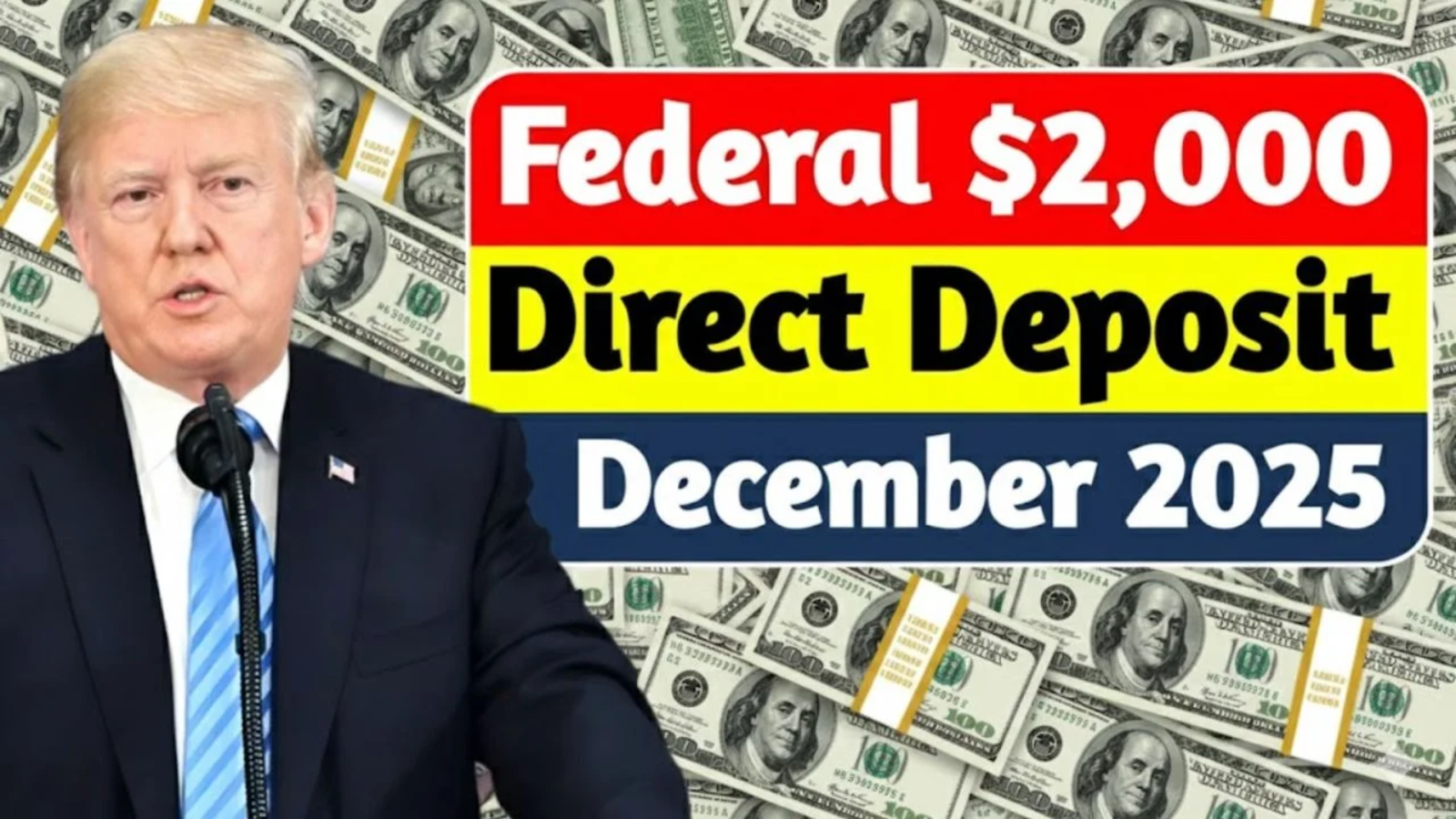
Federal $2,000 Deposits Coming in December 2025: Are you checking your bank app for a surprise $2,000 from the government this December? The idea has gone viral on social media, linked to President Donald Trump’s proposal for a “tariff dividend”—a cash rebate from extra fees on imported goods like toys or phones from other countries.
This plan would share government earnings with everyday Americans to help with holiday expenses or rising bills, similar to the stimulus checks sent during the COVID-19 crisis. But is it really coming in December 2025? In this complete guide, we’ll explain everything in simple words: the current status, who might qualify if it becomes law, the key rules, timelines, and how to prepare. We’ll use the latest reports to give you the facts and help you avoid scams.

As of December 10, 2025, the IRS and Treasury Department confirm no $2,000 deposits are approved or scheduled for December. Trump’s idea is still just talk—no law from Congress means no payments. Rumors often mix it with old 2021 stimulus claims (deadline passed April 15, 2025). Always verify on IRS.gov to dodge fakes.
What’s the $2,000 Deposit Proposal?
The $2,000 isn’t a new emergency payout but a “dividend” from tariffs—taxes on foreign imports that have brought in about $195 billion by September 2025. Trump first mentioned it in July 2025, then pushed in a November 9 Truth Social post: “A dividend of at least $2000 a person (not including high income people!) will be paid to everyone.” He says tariffs boost U.S. jobs and factories, and the cash would reward middle-class families while cutting the $37 trillion national debt.
Why No December Payments Despite the Hype?
Tariffs protect American workers by making foreign products costlier, but they often raise prices for buyers—up to $2,600 extra per family yearly. Trump’s rebate would give that back. White House press secretary Karoline Leavitt said on November 12 he’s “committed.” But Treasury Secretary Scott Bessent told ABC News no details discussed with Trump—it might become tax cuts, like no tax on tips, instead of checks. Congress must pass a bill, like Sen. Josh Hawley’s American Worker Rebate Act ($600–$2,400 per family), but it’s stalled. Fact-checkers say no December action—unsupported speculation. Trump confirmed no holiday payouts: “No, no” for 2025. The Supreme Court may review tariff powers soon, potentially halting funds.
Who Are the Eligible Beneficiaries?
No final rules since it’s not law, but Trump’s focus is on “middle and lower income” people—not high earners—to ease tariff-driven price hikes. It’d likely follow COVID stimulus: Everyday workers first.
- Income Caps: Full $2,000 for singles under $75,000 or couples under $150,000 adjusted gross income (AGI—earnings after deductions). Phases out above $80,000 single/$160,000 couple, zero at $100,000+.
- Who Counts: U.S. citizens or legal residents with SSN or tax ID. Age 18+; kids via parents.
- Family Boosts: $500–$600 per dependent, up to $2,400 for four.
- Special Groups: 123–150 million under $100,000, including SSI (aid for low-income disabled/seniors) or veterans if AGI fits. Non-filers? File taxes to prove.
62% support per polls, but slipping.
Key Rules for Beneficiaries
Tax-free like past stimulus—no owe-back. IRS uses tax records for auto-delivery; update bank for direct deposit. High earners/non-residents? Excluded. Rules mirror 2021 checks: Prove income via recent returns.
Timelines: When Could Deposits Hit?

Trump: No 2025 holidays; “middle of next year, a little bit later”—June–July 2026, before midterms. Commerce Secretary Howard Lutnick: “Next year.” IRS batches by SSN if approved.
Court or budget snags could delay. Direct deposits: 1–5 days post-approval.
| Delivery Method | Estimated Wait (After Approval) | Pros | Cons |
|---|---|---|---|
| Direct Deposit | 1–5 days | Fastest, secure | Needs correct bank info |
| Paper Check | 7–14 days | No bank required | Slower, theft risk |
| Debit Card | 5–10 days | Easy access | Small fees possible |
From IRS past programs.
How to Prepare and Claim
No claim yet—IRS auto-sends if eligible. Prep:
- Link bank on IRS.gov.
- Track with “Get My Payment” tool.
- For states: Check local rebates adding up.
CRFB: $600 billion cost vs. $300 billion tariffs—debt risk high.
FAQs on $2,000 Deposits 2025
Q: Coming in 2025? A: No—Trump says 2026; no IRS plan.
Q: Tariff dividend simple? A: Rebate from import taxes for middle earners.
Q: Apply or automatic? A: Auto via taxes; update info.
Q: No bank? A: Check or card, but direct quicker.
Q: Families/seniors? A: Yes—extras if income under caps.
Conclusion
The $2,000 federal direct deposit for 2025 is full of hope but short on reality: Trump’s tariff dividend could rebate $300 billion to 150 million middle- and low-income beneficiaries, but with no bill, court hurdles, and costs outpacing revenue ($600B needed vs. $300B raised), it’s 2026 at best. Under-$75,000 earners lead, with IRS direct deposits fast if greenlit mid-year.
Experts caution debt and inflation risks. For now, use tax refunds or state aid. Verify claims, file taxes well, budget steady. If it arrives, celebrate; if delayed, knowledge keeps you ahead.