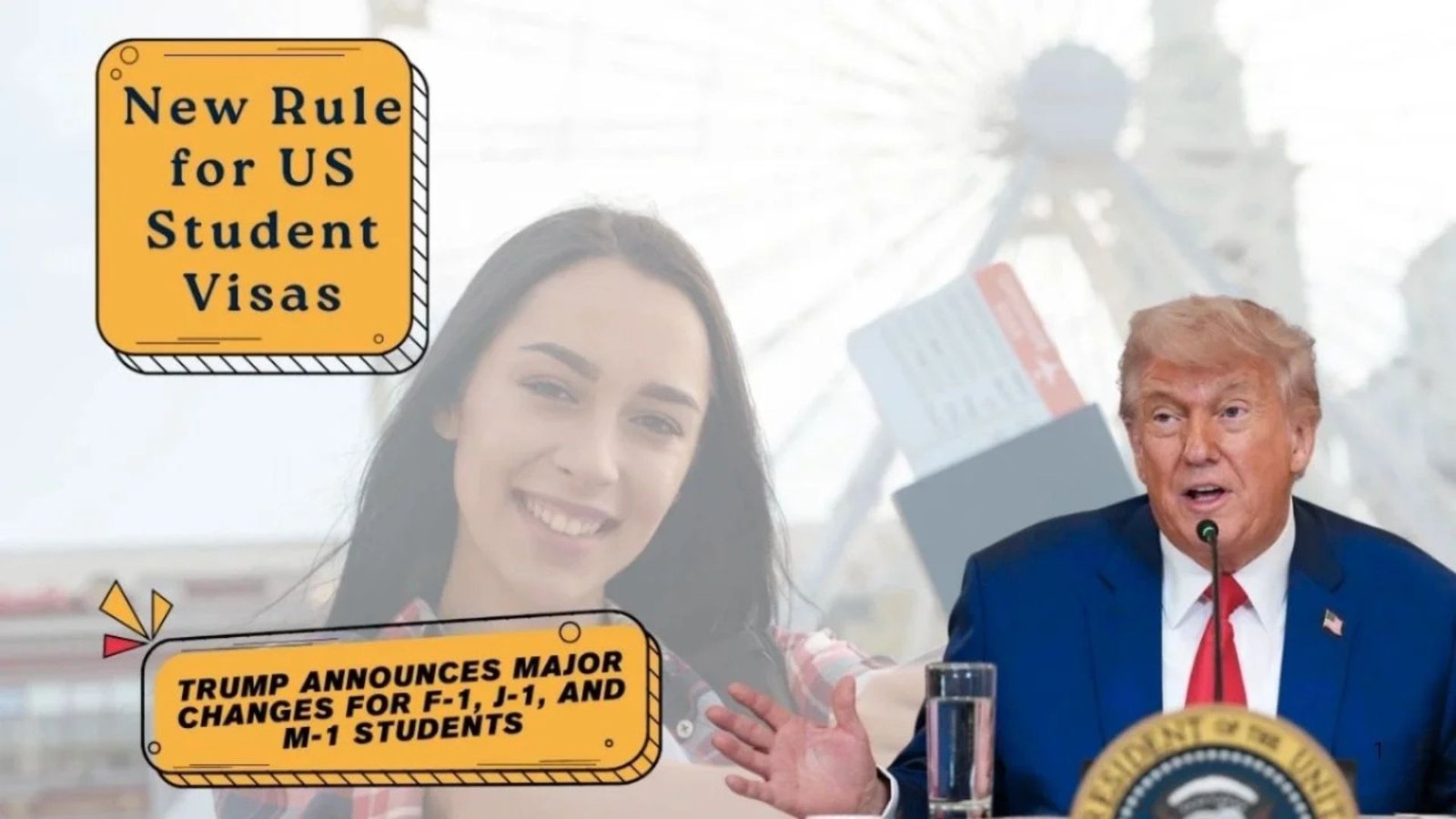
Imagine planning your dream U.S. education only to face stricter timelines, deeper social media checks, and paused appointments—welcome to the evolving world of 2025 student visa updates. Under the Trump administration, the Department of Homeland Security (DHS) and State Department rolled out significant shifts for F-1 visa changes 2025, J-1 visa rules 2025, and M-1 visa eligibility 2025, aiming to curb overstays while enhancing security. These US student visa policy shifts impact over 1.1 million international students, from undergrads to PhD candidates. With pauses in processing and fixed stay limits, staying ahead means understanding international student visa requirements now—here’s your roadmap to navigate them.
What Are the Major 2025 Student Visa Updates?
The 2025 student visa updates stem from a DHS push for oversight, announced in August and fast-tracked by December. Gone is the flexible “duration of status” (D/S)—now, fixed periods cap stays at four years for most, requiring USCIS extensions for longer programs. Social media vetting expanded in June, and interview waivers largely ended in September, sparking delays and a 15% drop in issuances. These US student visa policy shifts target fraud but raise concerns over enrollment declines and economic hits exceeding $40 billion annually.
Impacts on F-1 Academic Student Visas

F-1 visa changes 2025 hit hardest for degree-seekers like bachelor’s or master’s students. The four-year cap replaces D/S, matching your I-20 end date but no more. Grace periods shrink from 60 to 30 days post-completion, limiting time for OPT transitions. Program switches are restricted in the first year for undergrads, and social media reviews now flag “high-risk” profiles, delaying approvals. Despite this, F-1 holders in good standing can petition extensions, but expect RFEs and longer waits.
Key F-1 Eligibility Thresholds
| Requirement | 2025 Update Details |
|---|---|
| Stay Duration | Fixed 4 years max; USCIS extension needed |
| Grace Period | Reduced to 30 days after program end |
| Program Change | No switches in first academic year for undergrads |
| Vetting | Mandatory social media screening |
Updates for J-1 Exchange Visitor Visas
J-1 visa rules 2025 tighten for scholars, interns, and au pairs under exchange programs. Like F-1, the four-year limit applies, with formalized USCIS oversight for extensions—sponsors must now justify ongoing cultural ties. Expanded vetting includes online presence checks, pausing appointments in May for implementation. J-1 work components, like Summer Work Travel, face sponsor reviews, potentially disrupting 100,000+ seasonal roles. Exemptions linger for short au pairs, but two-year home residency rules enforce stricter for some.
Changes Affecting M-1 Vocational Student Visas
M-1 visa eligibility 2025 aligns with the pack: four-year caps for non-academic pursuits like tech or culinary training. Less flexible than F-1, M-1s now demand proof of full-time vocational intent via updated FAM guidance. The May appointment pause and September waiver end mean in-person interviews for renewals, with social media dives adding scrutiny. Extensions require USCIS filings showing progress, but vocational fields may see higher denial rates amid fraud crackdowns.
Country-Specific Restrictions and Pauses

A June 9 Presidential Proclamation suspended F, J, and M visas for nationals from 19 high-risk countries—like full bans for Afghanistan, Iran, and Yemen, partial for Cuba and Venezuela. Resumed in late June with vetting, but slots remain scarce. Third-country applications are limited; apply in your home nation. These international student visa requirements exemptions apply to valid pre-June visas, but travel warnings persist—avoid international trips without stamps.
Steps to Prepare for These Visa Shifts
Update your DS-160 and I-20/DS-2019 now, prioritizing direct embassy checks for slots. Set up a clean social profile—limit public posts on sensitive topics. File extensions early via USCIS if nearing limits, with academic proofs ready. Consult SEVP-approved advisors for transfers, and monitor ICE alerts for final DHS rules. For OPT/STEM seekers, note unchanged renewals but brace for fee glitches on I-765.
Why These Changes Matter for Students
These 2025 student visa updates could slash enrollments by 20%, per higher-ed groups, hitting diversity and funding. For F-1/J-1/M-1 holders, it’s about balancing security with access—shorter stays mean rushed PhDs, disrupted research, and fewer U.S. talents staying post-grad. Economically, it’s a $40B hit; globally, it pushes students to Canada or Australia. Yet, proactive prep turns hurdles into hurdles crossed.
FAQs – 2025 Student Visa Updates
- When do F-1 visa changes 2025 take full effect? Proposed August 2025; comments closed September 29—final rule expected early 2026, but vetting started June.
- How does social media affect J-1 visa rules 2025? All F/J/M applicants face comprehensive online reviews; “red flags” trigger 221(g) refusals for more info.
- Can M-1 holders extend beyond four years? Yes, via USCIS petition with vocational progress proof, but approvals aren’t guaranteed amid stricter M-1 visa eligibility 2025.
- Are pre-2025 visas safe from bans? Yes—valid stamps before June 9 exempt you, per State Department guidance.
- What’s the impact on OPT under these US student visa policy shifts? OPT/STEM renewals unchanged, but grace periods align to 30 days; file I-765 early to dodge fee errors.
Conclusion

The 2025 student visa updates signal a tougher era for F-1 visa changes 2025, J-1 visa rules 2025, and M-1 visa eligibility 2025, prioritizing security over flexibility in international student visa requirements. From four-year caps to mandatory vetting, these US student visa policy shifts demand vigilance—check USCIS and State sites weekly, prep docs meticulously, and seek expert counsel. While challenges loom, informed action keeps your U.S. dreams alive. Stay compliant, stay connected, and turn policy into possibility this year.