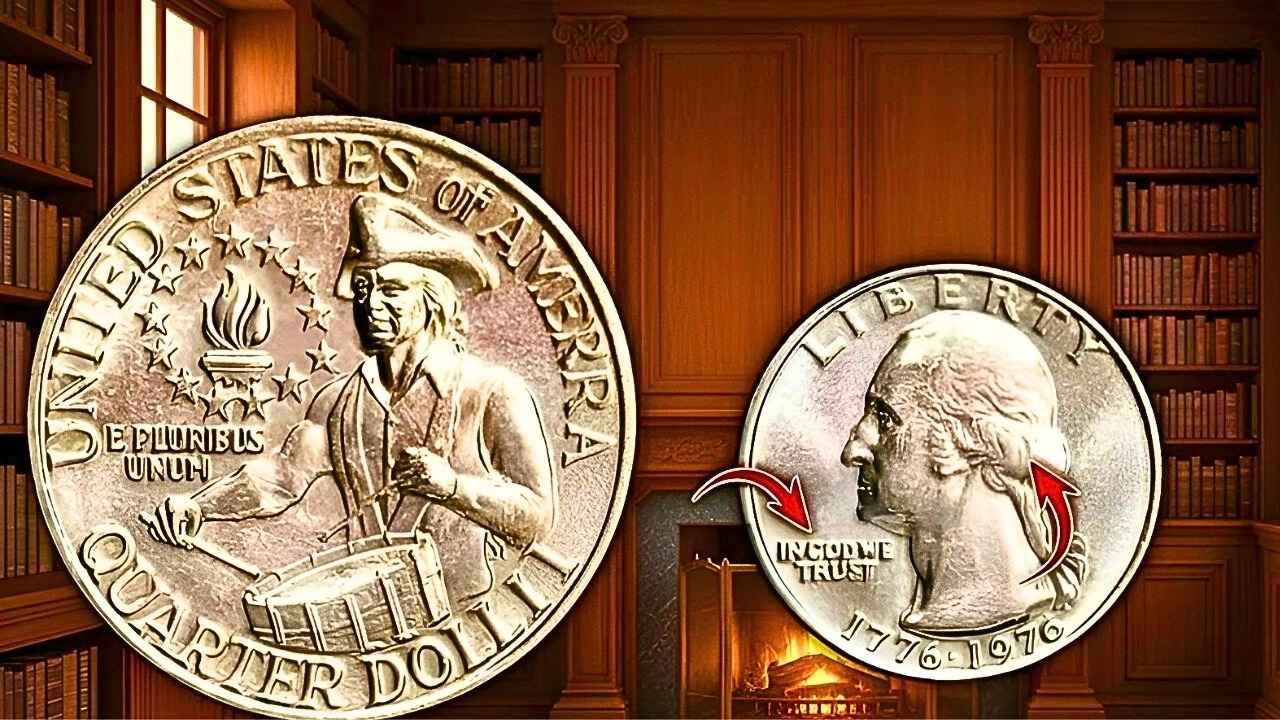
Digging through that dusty coin jar from the ’70s? You might be holding a ticket to riches without knowing it. In 2025, as America gears up for its 250th birthday, 1776-1976 error Bicentennial quarters are exploding in value at auctions, with some fetching up to $19,200 or more for mint mistakes and silver gems. These special Washington quarters, minted in 1975-1976 to celebrate the nation’s 200th anniversary, feature the dual date “1776-1976” and a cool reverse showing a colonial drummer boy with a torch and 13 stars. Billions were made, so most are just 25 cents, but factory flubs like double strikes or wrong-metal errors turn them into collector gold. With silver prices hot and nostalgia booming, now’s the time to check your stash – one rare error could fund a dream trip or more. Let’s break down the top errors, their stories, and how to spot a payday.
The Quick History: Why Bicentennial Quarters Spark Treasure Hunts
Picture 1976: Parades, fireworks, and red-white-and-blue everything for America’s big 2-0-0. The U.S. Mint joined the party by tweaking the Washington quarter – no eagle on the back, but a drummer symbolizing the Revolution, flanked by stars for the original colonies. Produced at Philadelphia (no mark), Denver (“D”), and San Francisco (“S” for silver proofs), over 4 billion hit circulation. Clad versions (copper-nickel) were everyday change, but silver-clad proofs went to collector sets. Rushed production led to cool errors that boost value big-time. In 2025, auction houses like Heritage report 30% jumps for error coins, thanks to online hunters and silver’s shine.
What Makes a 1776-1976 Error Quarter Worth a Fortune?

Errors aren’t flaws – they’re factory whoops that make coins unique. Value hinges on:
- Type of Goof: Double stamps or wrong blanks scream rarity.
- Condition: Shiny, untouched (MS-67+ grade) or proof-perfect (PR-70) examples shine brightest.
- Silver Edge: “S” proofs with 40% silver add melt value ($5-7) plus premium.
- Proof Over Clad: Errors on silver versions multiply bucks.
- Market Magic: 2025’s collector surge means even circulated errors start at $100-500.
Most quarters? Pennies on the dollar. But these errors? Life-changers.
Top 7 Rare 1776-1976 Error Bicentennial Quarters to Hunt For
Focus on these proven winners from recent sales. We’ve pulled auction highs for 2025 trends – circulated lowers the price, but gems soar.
1. Double Die Obverse (DDO): The Doubling Drama

The front gets stamped twice, blurring “LIBERTY,” the motto, or Washington’s face and dates. Philly and Denver versions (FS-101/102) show plump, stretched letters. A crisp DDO in MS-65? Up to $10,000 for bold doubling. Circulated starters: $150-500.
2. Struck on Nickel Planchet: Wrong Metal Mix-Up
A quarter blank gets swapped for a thicker nickel one (8.33g vs. 5.67g), creating a funky, oversized look. A 1976-D MS-67 example sold for over $5,000 at auction. Weigh yours – heavy? Jackpot potential up to $6,000+.
3. Off-Center Strike: Design Gone Sideways
The coin shifts during stamping, missing parts of the drummer or Washington. 10-20% off-center in good shape? $500-2,000; severe ones hit $3,000. Easy to spot: Crooked edges or blank zones.
4. Filled “D” Mint Mark: Greasy Ghost

Denver’s “D” gets clogged with grease, looking faint or plugged. Paired with off-center? eBay listings push $200-1,000 for clear errors. Common but collectible in high grades.
5. Struck Through Error: Fabric or Debris Block
Mint debris (like cloth) blocks the die, leaving raised blobs or flat spots. A cloth-struck MS-66 fetched hundreds; drum-line missing? $100-500.
6. Clipped Planchet: Missing a Chunk
The blank gets sheared wrong, creating a curved clip. Mild clips: $50-200; big bites on silver: $500+.
7. Silver Proof Deep Cameo: Not an Error, But Ultra-Rare Polish
No true error, but “S” proofs with frosted designs on mirrors in PR-70 Deep Cameo sold for $13,500-19,200. Hunt old sets – these “errors” in perfection pay huge.
Note: That $1.1 million hype? Likely clickbait for ultra-gems; stick to verified sales for real riches.
Here’s a fast value table for these 1776-1976 error Bicentennial quarters (2025 estimates; top grades like MS/PR-67+; circulated 20-50% less):
| Error Type | Key Spot | Circulated Value | Top Auction Value (USD) |
|---|---|---|---|
| Double Die Obverse | Blurry letters/dates | $150–$500 | $10,000 |
| Struck on Nickel | Heavier (8.33g), odd size | $500–$1,000 | $5,000+ |
| Off-Center Strike | Shifted design | $100–$500 | $2,000–$3,000 |
| Filled “D” Mint Mark | Faint/plugged “D” | $50–$200 | $1,000 |
| Struck Through | Raised flat spots | $50–$200 | $500 |
| Clipped Planchet | Curved missing edge | $50–$100 | $500+ |
| Silver Proof Deep Cameo | Frosty shine, no flaws | N/A (sets) | $13,500–$19,200 |
Data from Heritage, PCGS, and eBay trends – condition rules all.
How to Spot a Rare Error Bicentennial Quarter in Your Pocket
No lab coat needed – simple checks:
- Date Double-Check: Confirm “1776-1976” – fakes flop here.
- Weigh It: Silver “S”? 5.75g. Nickel error? Heavier. Scale app works.
- Magnify Mayhem: 10x loupe for doubling, clips, or shifts. Drum lines fuzzy? Dig deeper.
- Mint Mark Peek: “D” filled? “S” on clad? Red flags for riches.
- Shine Test: Proof-like? Store untouched – cleaning kills 80% value.
Apps like Coin ID Scanner zap pics for instant error alerts. Magnet? Silver won’t stick.
Where to Sell Your Error Discovery for Top Dollar
- Quick Cash: eBay or local shops for $100-1,000 finds – list with pro pics.
- Big Leagues: Heritage Auctions for $5k+ – grade first at PCGS/NGC to double value.
- Track Trends: Greysheet or NGC for 2025 shifts; silver bumps add 10-20%.
Final Flip: Could Your Bicentennial Error Be Your Big Break?
1776-1976 error Bicentennial quarters aren’t just shiny relics – they’re mint mishaps with millionaire potential, from $10k DDOs to $19k silver proofs. In 2025’s hot market, that forgotten roll could be your windfall. Raid the jar, scan smart, and consult pros to skip fakes. History’s handing out surprises – grab yours before it’s too late. Happy hunting; may your drummer beat a fortune!